

Introduction
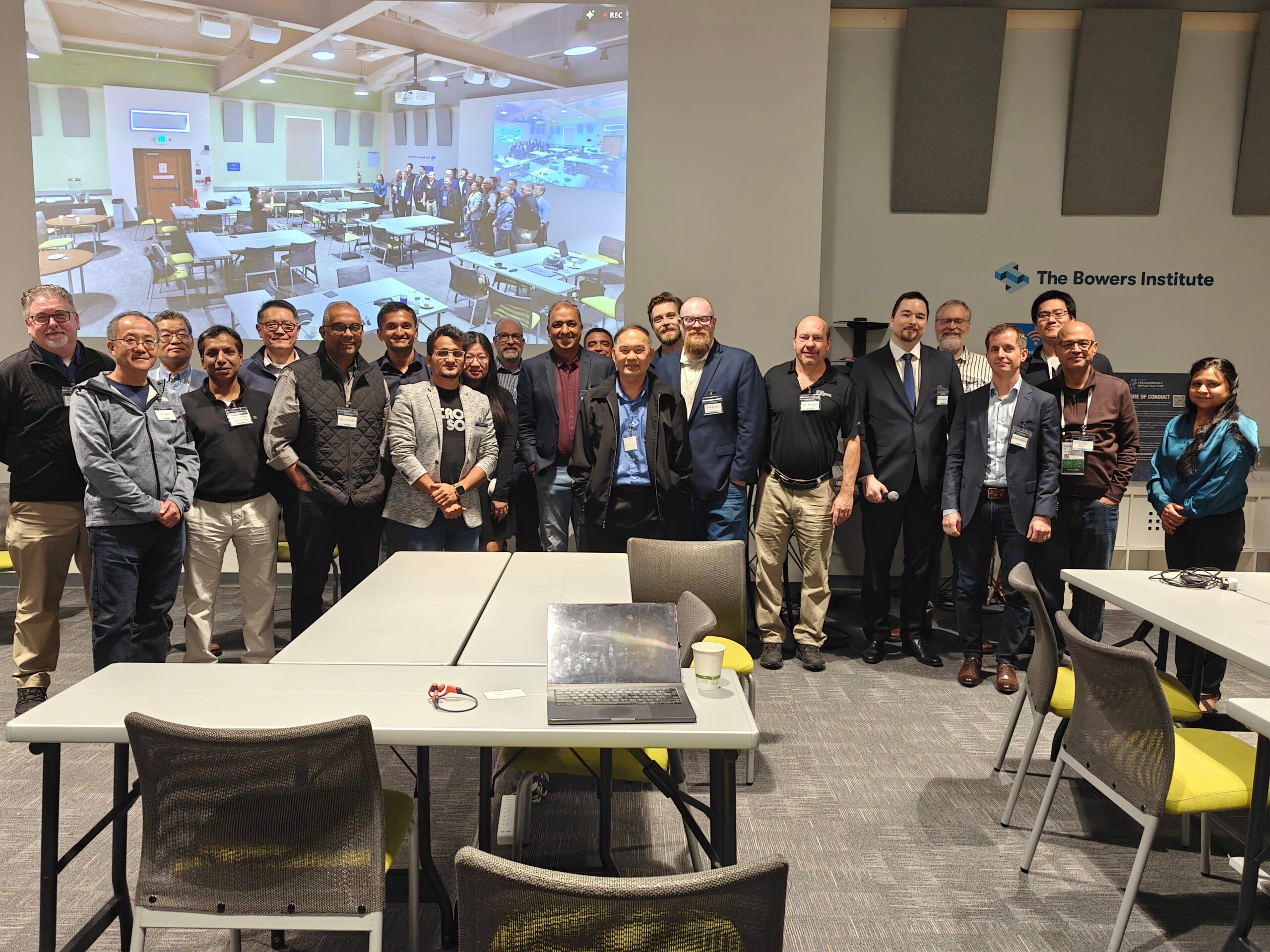
On Thursday, October 15, 2026, the Open Programmable Infrastructure (OPI) community gathered for the OPI Summit on DPUs/IPUs 2026, a focused day on the processors that are quietly reshaping the data center. Data processing units (DPUs) and infrastructure processing units (IPUs) take networking, storage and security work off the host CPU, and they are fast becoming essential to AI infrastructure.
The OPI Project exists to build an open, vendor-neutral software ecosystem for these devices, so that operators are not locked into one vendor’s stack. The Summit brought that mission into one room: hardware vendors, cloud and hyperscale operators, and the engineers who deploy and run these systems day to day.
The day was built for infrastructure architects, platform and network engineers, storage and security specialists, and anyone building or operating AI clusters. It was equally relevant for developers who want to contribute to open DPU/IPU tooling, and for newcomers curious about where programmable infrastructure is headed.
If you were unable to join us, you can catch up on all the sessions on our YouTube channel: OPI Summit on DPUs/IPUs 2026.
The sessions
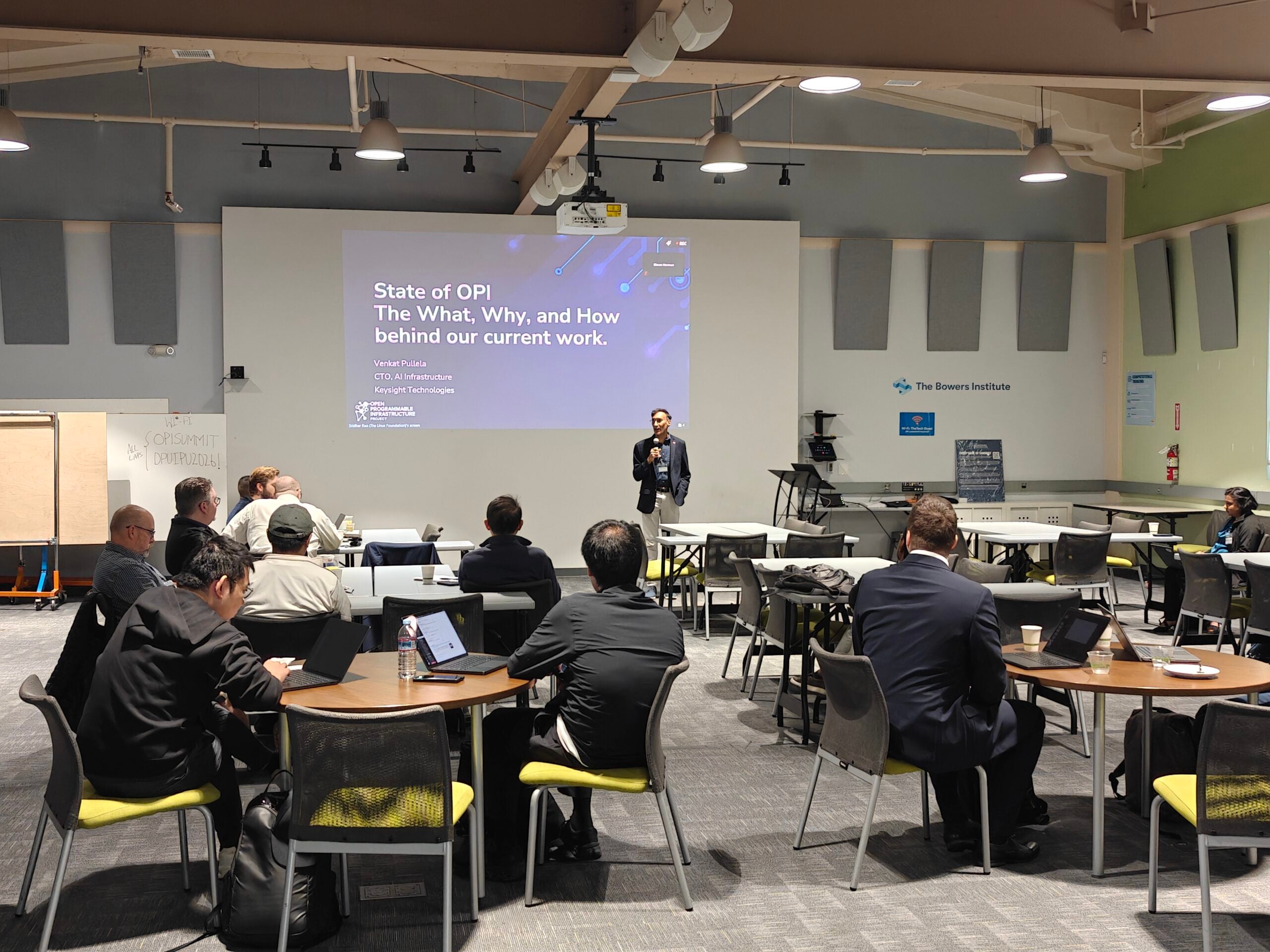
Venkat Pullela – OPI Governing Board Chair giving a status update to set the scene.
State of OPI: The What, the Why and How behind our current work
Venkat Pullela, CTO of Networking at Keysight Technologies, opened the day after a continental breakfast. His remarks set the stage for a program that moved from the nuts and bolts of deploying DPUs to their growing role at the heart of AI infrastructure.
From Platform Baseline to Platform Handoff: Automating DPU Onboarding with sZTP
Anssi Söderena of FusionLayer tackled one of the first hurdles any operator hits: getting a DPU from the loading dock into production. His session looked at secure zero-touch provisioning (sZTP) as a way to automate onboarding, taking a device from a known platform baseline to a clean handoff without manual, error-prone setup. At fleet scale, that automation is the difference between a pilot and a real deployment.
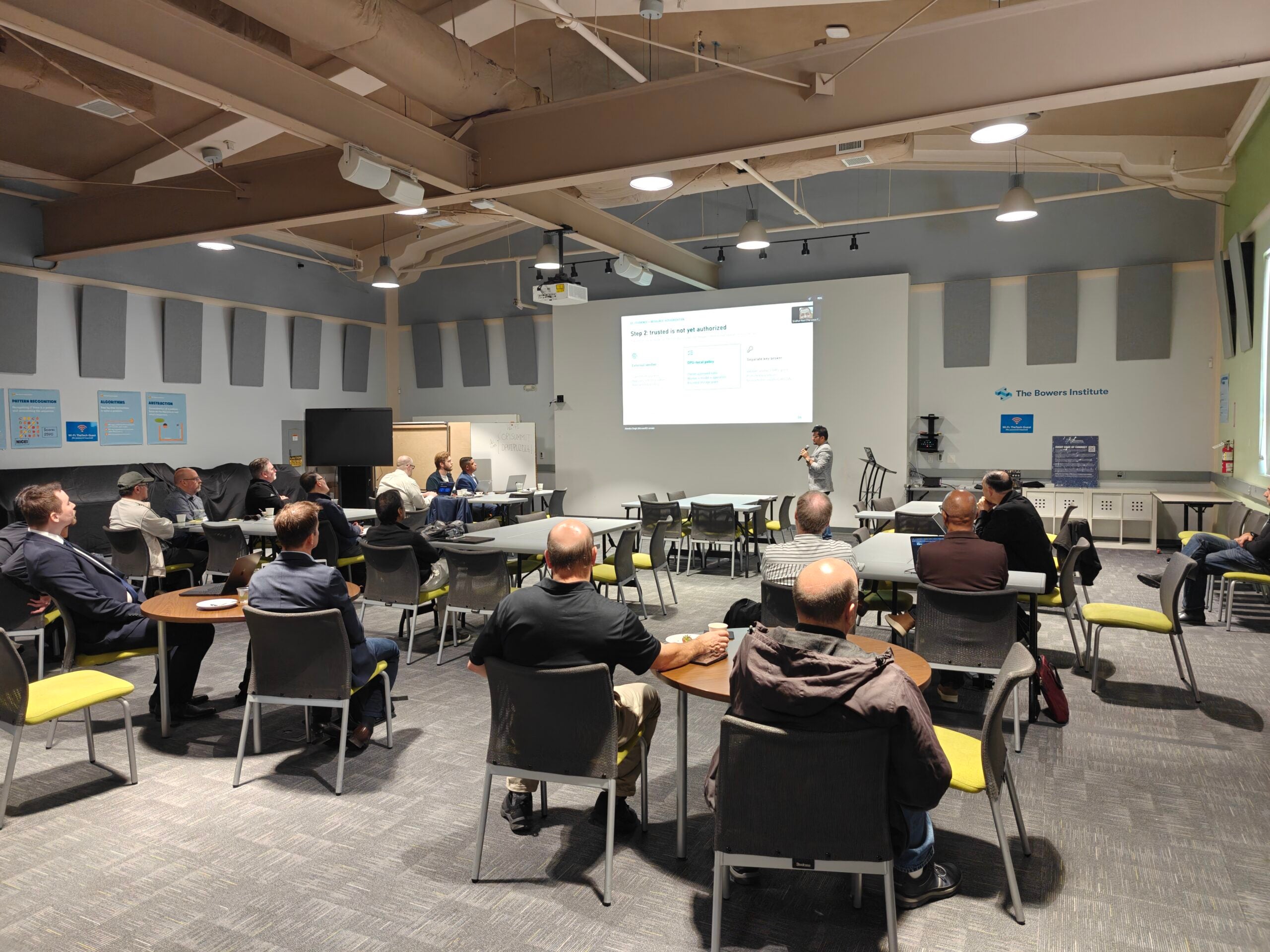
Jitendra Singh (Senior Software Engineer at Microsoft) presenting his talk “Reimagining DPUs for Storage Control and End-to-End Confidential AI”.
Reimagining DPUs for Storage Control and End-to-End Confidential AI
Jitendra Singh and Anshuman Ghosh of Microsoft explored how DPUs can take on a bigger role in storage control while also anchoring confidential computing for AI. Their talk examined how keeping data protected end to end, from storage through to the AI workload, can be built into the infrastructure layer rather than bolted on afterward.
From Complexity to Deployment: Bridging the DPU Adoption Gap
Benoit Paquin of Kalray addressed a frank question: if DPUs are so capable, why is adoption still uneven? His session focused on the complexity that stands between promising hardware and production deployment, and on practical ways the industry can close that gap through better software, integration and standards.
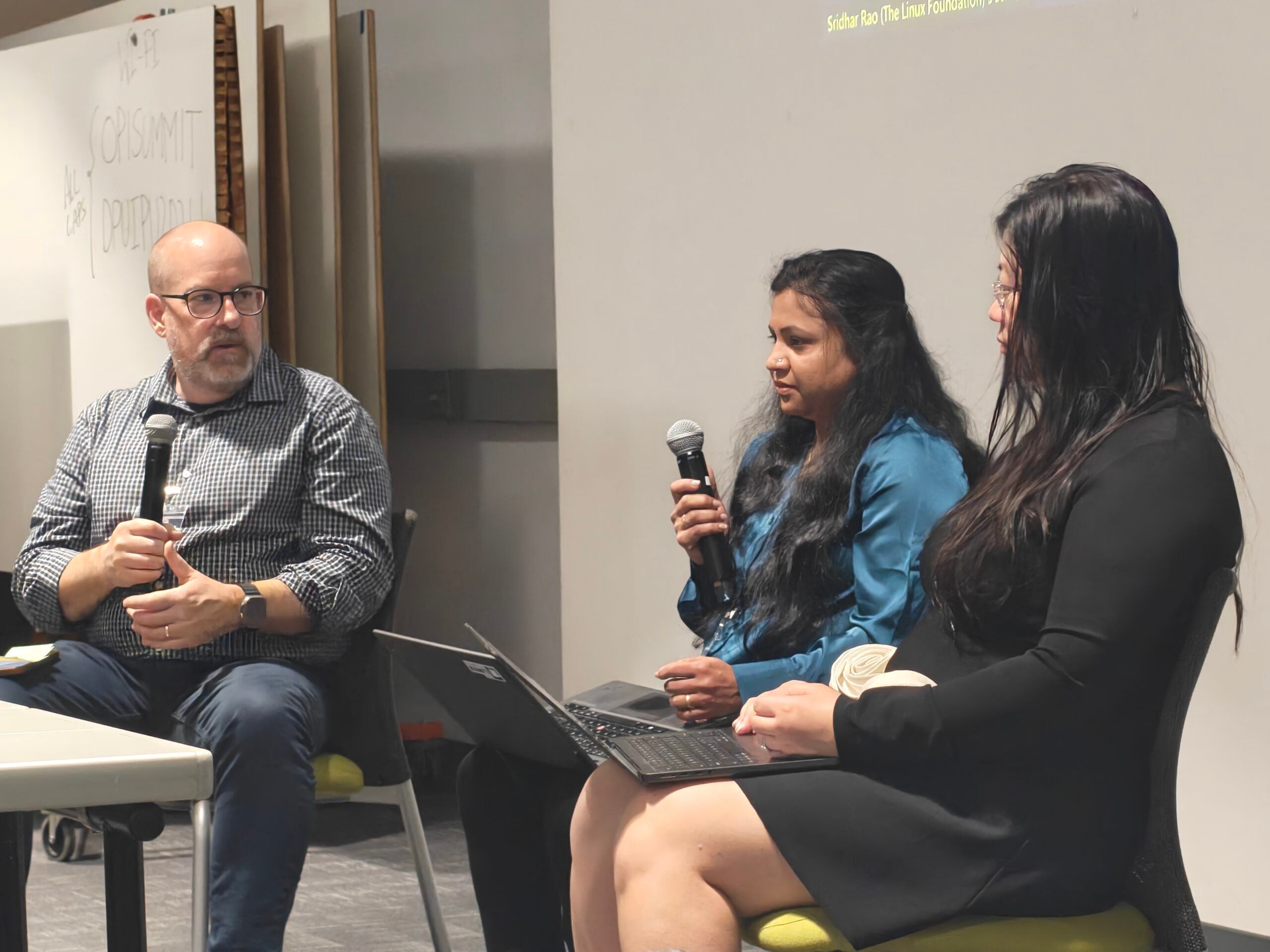
Paul Pindell (Principal Architect at F5 Networks) moderating a panel featuring Rajalaxmi Angadi (Senior Engineering Manager at Intel) and Tina Tsou (Board Chair of LF Edge) on the role of DPU/IPUs in AI Infrastructure.
Feeding the AI Factory: The Role of DPU/IPUs in AI Infrastructure
Moderated by Paul Pindell of F5 Networks, this panel brought together Tina Tsou, Board Chair of LF Edge, and Rajalaxmi Angadi, Senior Engineering Manager at Intel. The discussion centered on the “AI factory” and how DPUs and IPUs keep it fed: moving data efficiently, isolating workloads and freeing GPUs and CPUs to focus on compute.
How Open Hardware Access Builds the Next Generation of Infrastructure Engineers
In his session, Sam Dasilva of Red Hat turned to people rather than silicon. His talk made the case that open access to real hardware is how new engineers learn infrastructure, and that lowering the barrier to hands-on experience is essential to growing the talent pool this ecosystem depends on.
Network Engine’s Hardware Matrix Problem, and Why DPUs Solve What NICs Can’t
Josh Brooks of WorldTech IT/Network Engine shared a practitioner’s view of the “hardware matrix” problem: supporting many combinations of hardware, features and environments. He explained why traditional NICs fall short of solving it, and how the programmability of DPUs offers a more sustainable path.
KV Cache in the Agentic Era: The Five Forces that Decide Where the Cache Lives, and What a DPU Can Do About It
Jigar Kuverji Savla of Tensordyne took on one of the hottest topics in AI inference. As agentic AI drives longer contexts and more persistent sessions, the key-value (KV) cache grows in size and importance. His session laid out five forces that determine where that cache should live, and how DPUs can help manage, move and serve it efficiently.
One Control Plane, Many DPU/IPUs: SONiC DASH and Open DSE Powered by OPI
Serey Kong of Intel closed the summit by showing OPI’s mission in action. His session covered how SONiC DASH and Open DSE, powered by OPI, can deliver a single control plane across many different DPUs and IPUs. It is a concrete picture of the vendor-neutral future the project is working toward.
Why this Summit matters
The throughline of the day was clear: DPUs and IPUs are no longer a niche optimization. They sit at the center of how AI infrastructure is secured, provisioned, networked and fed with data. Yet the sessions were just as clear that hardware alone is not enough. Adoption depends on automation, shared control planes, open standards and a pipeline of engineers who know how to use these devices.
That is exactly the gap OPI was created to fill. By bringing vendors, operators and open source developers together, the Summit showed how a common, vendor-neutral software foundation can turn a fragmented hardware landscape into a platform the whole industry can build on.
What comes next
The conversations started at the Summit continue in the OPI Project’s open working groups, code repositories and community meetings. Whether you deploy DPUs today or are just starting to explore them, there is a place for you to contribute: test the reference implementations, bring your use cases, or join a working group. We look forward to building on this momentum together and to seeing you at the next OPI Summit.
Catch up on all the OPI Summit 2026 sessions here.
Want to help shape the future of DPUs/IPUs? Join the OPI Project.
